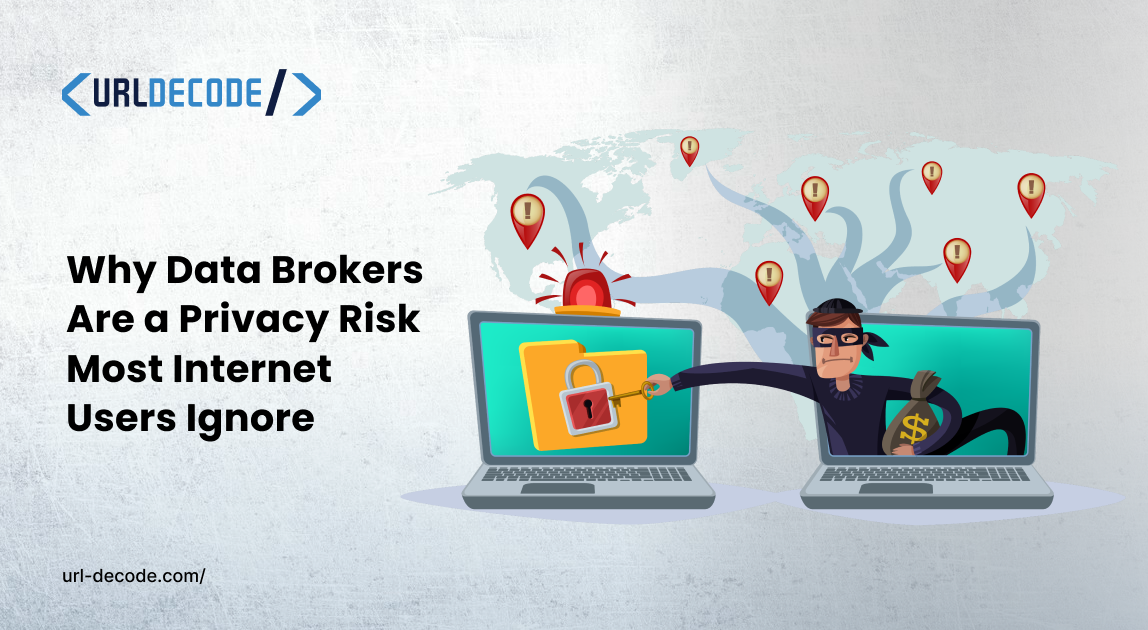
Why Data Brokers Are a Privacy Risk Most Internet Users Ignore
You are not alone in that; having typed your name in the search engine, you found the personal information that you do not necessarily remember posting online. I have myself experienced it, and it is disconcerting. The cause of this privacy problem that should not be ignored is data brokers. They silently gather, bundle, and trade personal data daily; most of the internet users do not consider them.
Data brokers are working behind the curtain; therefore, they can be easily disregarded. Actually, not considering them does not make the risk go away. As a matter of fact, the more digital our lives turn out to be, the stronger the data brokers become.
What Are Data Brokers, Really?
Data brokers are these businesses that gather personal data based on publicly accessible records, websites, apps, and online services. They then bundle this data in detailed profiles and sell them to advertisers, marketers, employers, or even political groups.
The most surprising fact is the extent to which this data can be broad. It can entail your entire name, address, phone number, email, job history, shopping behavior, family information, and even assumed interests. All this is often not something you need your own permission for.
How Your Data Ends Up in Broker Databases
Your information does not need to be gathered as a result of anything wrong. The daily use of the internet is sufficient. Newsletter subscription, filling in surveys, loyalty cards, or even a simple visit to some websites may add to data trails. The public records, such as property ownership or voter registration, are also a contributing factor.
These fragments of information are slowly sewn together into the profiles that are too personal to be agreeable in the first place.
Why Most Internet Users Ignore This Risk
It is one of the reasons why data brokers go unnoticed, as they do not deal with individuals face-to-face. It has no login page, no dashboard, and no warning message.
Complexity is another cause. The privacy policies are lengthy, and the opt-out is a process involving too much confusion, and most importantly, people have no idea where to start. It is simpler to scroll over the problem rather than to face it.
The Privacy Threats That You need to know about
Data brokerage is not only a targeted advert. The risks go much deeper.
Identity Theft and Fraud
Bad actors do not need to strive when the personal information is readily available. Data brokers can be used to phish, steal an account, or commit identity theft.
Stalking and Personality Safety Problems
The addresses and phone numbers of the organization should be made publicly available, which may pose safety concerns in the real world. This is extremely concerning to journalists, activists, and individuals holding a public position.
Lack of Control over Your Online Identity
It is, perhaps, the most aggravating stage to lose control. You do not know whose data you have, whether it is accurate, or whether it is being used. Once it is sold, it can hardly be traced anymore.
The factor that has made regulations not entirely address the issue.
Transparency has been increased by data privacy laws, including GDPR and CCPA, but is not always practiced. Data brokers exist in large numbers across the globe, and they are difficult to control.
There are opt-out systems that are usually manual and time-consuming. There are even brokers who re-list your information after some time, and privacy protection is not a one-time solution.
Are you really able to lower your exposure?
Yes, the good news is yes, but it needs to be aware and consistent.
1. Audit Your Online Footprint
Enter your Name, email, and phone number. You will soon get an idea of the available information in the public.
2. Minimise Data Sharing at the Source.
The unwanted sign-ups are to be avoided, and the permission of the apps is to be considered. Minor details are worth it in the end.
3. Use Dedicated Privacy Tools
It can be exhausting to manually remove personal information from data broker websites. Each platform has a different opt-out process, and many require identity verification or repeated follow-ups. For most users, this quickly becomes time-consuming and is often abandoned midway, leaving personal data exposed despite good intentions.
This is where dedicated privacy tools can make a real difference. As Cybernews explains in its review, services like Incogni automate the data removal process by handling requests to multiple data brokers at once, outlining what types of information are targeted and what users can realistically expect. This approach simplifies long-term privacy management and makes personal data protection far more practical for everyday internet users.
Why Is This Question More Topical than Ever?
The era we are experiencing is one where individual information is power. The better your profile, the more you can be influenced into making decisions, attacking your weaknesses, or capitalizing on your trust.
With remote work, online payments, and online services expanding, data brokers will only get more and more powerful unless users fight back. By overlooking them, they will not become harmless. It just makes them invisible.
Conclusion
Data brokers live off of silence and confusion. The risks are more difficult to neglect once you realize the functioning of the system. You do not have to turn yourself into a privacy guru overnight. Cracks of consciousness and management can make an immense difference, even when it comes to exposure.
The point is that it is time to understand the fact that your data is valuable, and it is not a choice whether it should be protected or not. In the digital world where the speed of information flow is more than ever, owning your own privacy is one of the best choices you will ever make.
Frequently Asked Questions About Data Brokers.
1. Are Data Brokers Legal?
Yes, for several nations, data brokers operate lawfully by gathering data through public records and any other data to which the user gives their consent. Yet, being legal does not necessarily make it ethical and risk-free to the people.
2. Is It Possible to Take My Data off Data Broker Sites?
In most cases, yes. A lot of data brokers provide an opt-out; the procedure can be complicated and is likely to have to be repeated in case your data is re-listed in the future.
3. How do I find out whether my data is being sold or not?
The first thing would be to enter your name and email or phone number into a search engine. Some may be listed on people-search or data aggregation web pages containing personal information.
4. Is One-Time Removal Enough?
Usually not. Data brokers tend to update their databases, and that is why they require constant monitoring or frequent requests to remove data; otherwise, they will threaten pr