The Hidden Technology Securing Every Login: Identity Verification Explained
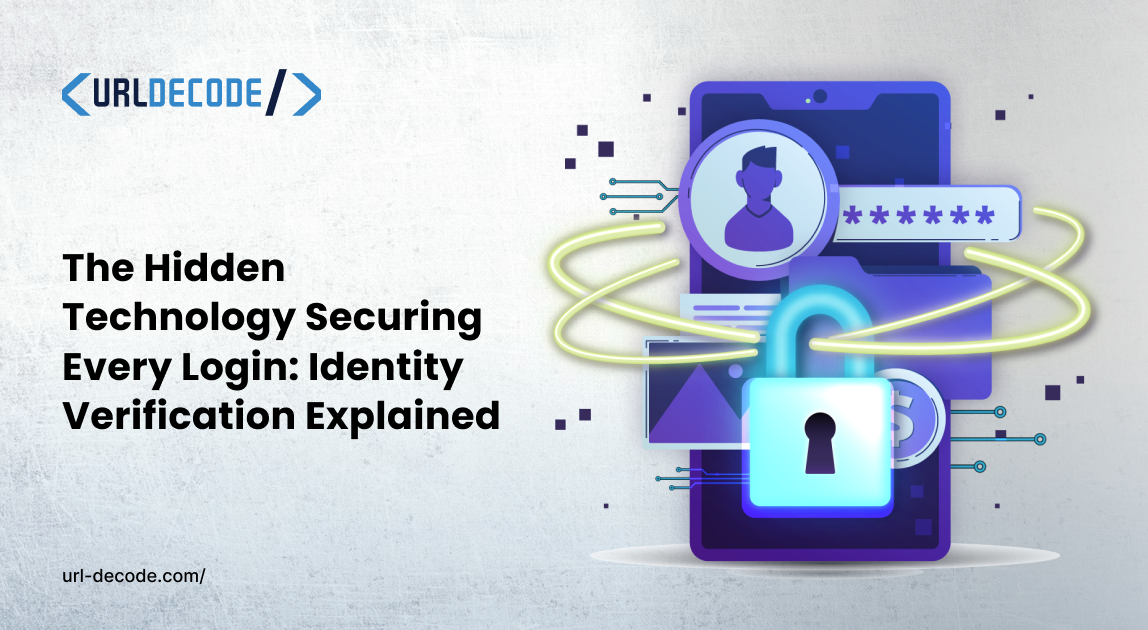
When you log in to a bank application, open your mail, or check your account on any online platform, a whole system of security measures will come into play. Such systems operate in the background, analyzing who you are, who your device is, and even how you behave to ensure that you really are who you are saying you are.
Entering a password or scanning your face might seem like the easiest way to verify who you are; however, in practice, it is running on a stack of sophisticated technology that guards against fraud, impostors, and keeps your personal information secure in real time. The current verification systems are more advanced than ever, with hackers evolving new tricks, and the knowledge of their functionality provides insight into the hidden protection that safeguards any online communication.
Password to Intelligent Authentication Evolution
During the early years of the internet, passwords were the major way of authentication. However, with the exponential data breaches and credential theft, the weakness of traditional logins was revealed. Phishing attacks, keyloggers, or reused credentials that have been leaked online do not require much effort to bypass modern cyber threats.
This compelled the security industry to completely reanalyze identity verification by moving away from statistical information and moving to dynamic and intelligence-based authentication. The systems today are also not based on what you know alone. Their evaluations include what you are like, your behaviour, and even whether your online presence matches your real personality.
Biometrics: The Digital Trust of the New Foundation
Biometric authentication has become one of the most powerful levels of login security. The advanced algorithms match your biological attributes with stored templates when unlocking your phone with your face or your fingerprint, seeking extremely detailed matches that cannot be replicated. Such systems examine depth, texture, light reflections, and motion to be sure that there is a real person.
The power of liveness detection is important in this case, as it verifies natural movements of the face to deny the cybercriminals an opportunity to make use of pictures, masks, or deep fake videos. This technology makes biometrics one of the safest verification technologies that are available nowadays.
Background Document Intelligence at the First Login
Most platforms have to first of all authenticate your identity before biometrics are used. Passports, ID cards, and licenses are scanned using document verification systems with amazing accuracy. Holograms, fonts, microprint, embedded chips, expiration dates, and security patterns are investigated by artificial intelligence to establish authenticity.
A mere picture of your ID sets off dozens of verifications that identify any attempts at forgery or manipulation with a digital picture. When the needed information is pulled out of the system, it is compared to global databases and formal files, and the basis of long-term, reliable access to the system is established.
Machine Recognition as a Silent Gatekeeper
Each time a user logs in, it also causes device intelligence. Your phone, laptop, or tablet has a unique signature that comprises hardware information, operating system information, browser settings, network history, and even laptop status, such as system updates, security level, and configuration changes. These patterns are followed by identity verification systems to identify trusted devices.
Should a login be instantly triggered by a suspect device in a new area or with a changed configuration, the system will immediately raise an alarm about the activity and demand further authentication. This thin veneer prevents innumerable attempts at takeover of accounts that otherwise would have remained unrecognized.
One practical solution is to use an antidetect browser, which helps users manage multiple browser profiles and device fingerprints securely, allowing safe handling of multiple accounts without conflicts.
Continuous Authentication and Behavioral Biometrics
Verification of identity does not cease after you log in to the screen. Tested authentication keeps track of the typing, swiping, scrolling, and interaction with your device. Such small behavioral patterns create a digital signature that can hardly be recreated by hackers. Should your typing speed or your mouse movements seem unusual, then the system notices the anomaly and interferes.
This constant authentication plays a vital role in averting an attack of hijacking an active session by criminals who hijack the session once they are authenticated.
Artificial Intelligence and Big Data: Comparing Data on the Back-End
All these layers are joined by artificial intelligence. The biometrics, document verification, device signals, behavioral patterns, and location verification are all processed by modern identity check-ups. AI applies risk scores on a worldwide basis by taking into account fraud trends, watchlists, sanctions information, and identity theft.
This enables the system to take real-time decisions that are user-friendly and secure. Rather than putting all the users through rigorous checks, AI checks low-risk logins in real time and provides a challenge to suspicious ones, resulting in a smooth but secure login process. To explain this complex flow clearly to users and stakeholders, an AI video generator can create simple, visual walkthroughs that build trust and understanding.
Traditional risk management often relies on periodic reviews. However, risks evolve rapidly, and organizations must adopt a forward-looking approach to risk, often supported by outsourced finance and accounting support for growing companies that ensures accurate reporting, compliance, and real-time financial visibility.
The reason behind the importance of this invisible technology is more than ever before
The digital world is connected as never before. Individuals use the internet to handle money, health, education, employment, and communication. With the increase in convenience, the world has become more threatening. Deepfake identities, synthetic ID fraud, automated bot attacks, and mass credential theft have rendered the old system of logging outdated.
These threats have been kept off, and digital trust has been preserved by the invisible technology behind identity verification.
Smart, Frictionless Verification of the Future
The identity verification is moving towards a world where users do not have to remember their passwords or repeat them when sharing personal information. Decentralized identity, biometrics, and artificial intelligence will provide a contactless experience where the user is trusted by applications and devices, and between countries, without loss of privacy.
The protocols that enable login to the system today are the basis of a new era of portable, safeguarded, and recognized digital identity.
There is some kind of silent network of intelligence working around the clock behind every login to ensure that you are safe. Whenever you unlock your device or log into an account, you are already seeing only the tip of the iceberg of an incredible technological barrier meant to keep your identity safe in a fast-paced digital society.