How to Measure Influencer Marketing ROI: Metrics That Matter Beyond Likes and Views
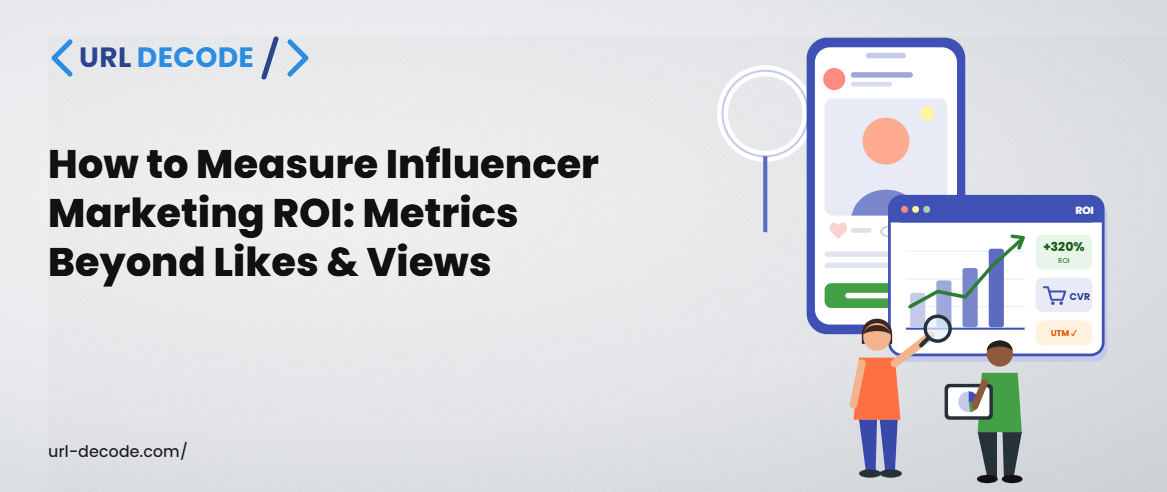
Influencer marketing ROI is the return you earn compared with what you spent on the campaign. To measure it properly, set one business goal before you start, track it with unique links or codes, and judge results by cost per outcome (sales, sign-ups, leads), not by likes or views.
Almost every brand we speak to has had the same experience. The influencer post did well, the comments were lovely, the view count looked great, and then someone in finance asks, "So what did we get for it?" Nobody has a clear answer.
That gap is the reason influencer campaign measurement deserves more attention than it gets. Below is how we approach it at Hammerhead Global, and how you can do the same without a complicated setup.
What is influencer marketing ROI?
Influencer marketing ROI compares the value a campaign brought in against its total cost. The basic formula is:
ROI (%) = (Revenue from the campaign − Total campaign cost) ÷ Total campaign cost × 100
"Total cost" should include more than the creator's fee. Add content production, product seeding, agency or management fees, paid amplification, and any usage rights. If you leave these out, your ROI will look better than it really is.
Not every campaign is meant to drive direct sales. If the goal is awareness or launching a new product, "revenue" may be the wrong measure, and that's fine. What matters is that you decide the goal first. The same thinking applies to live activations, and we've covered how to calculate event marketing ROI separately.
Why are likes and views not enough?
Likes and views tell you that people saw something. They don't tell you whether anyone cared enough to act.
A creator with a huge following can deliver a lot of impressions and very little business impact if the audience doesn't match your customer. A smaller creator with a loyal, relevant audience can quietly outperform them. Reach is a starting point, not a result.
This is why experienced teams treat vanity metrics as context and business metrics as the score.
Which influencer campaign KPIs should you track?
Choose your KPIs based on the goal of the campaign. A simple way to organize them:
|
Campaign goal |
KPIs worth tracking |
|
Awareness |
Reach, unique impressions, video completion rate, share of voice |
|
Engagement |
Engagement rate, saves, shares, meaningful comments |
|
Traffic |
Link clicks, click-through rate, quality of visits (time on site, pages viewed) |
|
Leads |
Sign-ups, form fills, cost per lead |
|
Sales |
Conversions, revenue, cost per acquisition (CPA), return on ad spend |
Two things we'd add:
- Saves and shares often matter more than likes. They show that someone found the content useful enough to keep or pass on.
- Comment quality matters. Fifty genuine questions about the product are worth more than five hundred emoji replies.
If you want a wider view of what to measure across your content, this list of content marketing metrics to track is a useful companion.
How do you track results back to a creator?
This is where most campaigns fall down. If you can't connect a sale or a sign-up to a specific creator, you're guessing.
The practical options are:
- Unique tracking links. Give each creator their own link with UTM parameters so your analytics shows which creator sent which visitor.
- Discount or promo codes. Useful when the audience is unlikely to click a link, for example on Instagram Stories or in videos.
- Landing pages per creator. Good for bigger collaborations, and it lets you tailor the message to that audience.
- Post-purchase surveys. A simple "How did you hear about us?" question catches the people who saw a post and searched for you later.
Keep your naming consistent from the start. A tracking sheet with messy or duplicate campaign names is very difficult to clean up afterward. Some tools make this easier than others, and we've compared the best influencer marketing platforms for brands if you're choosing one.
What is a good influencer marketing ROI?
There's no single number that applies to every brand. A fair benchmark depends on your margins, your product's price, and how long customers take to buy. A campaign with a modest first-sale return can still be profitable if those customers come back and buy again, which is why some teams also look at customer lifetime value.
A better question than "Is this a good number?" is "Is this better or worse than what we get from our other marketing?" Compare influencer cost per acquisition with your paid social, search or email results, and keep that comparison in mind when you plan your marketing budget for the year.
How do you measure the value you can't easily count?
Some benefits of brand collaborations don't show up neatly in a spreadsheet: brand recall, trust, a library of usable content, or a new audience discovering you. You can still measure them, imperfectly:
- Run a brand-lift or recall survey before and after a campaign.
- Watch for a rise in branded search and direct traffic during and after the campaign.
- Track follower growth quality, not just numbers.
- Count how many pieces of creator content you can reuse in ads or on your own channels, and what that would have cost to produce.
Be honest in your reporting about which numbers are hard data and which are estimates. Clients trust a report that admits its limits more than one that claims to know everything.
Common mistakes that skew influencer ROI
- Picking creators by follower count alone. Audience fit matters more than size, and it's the first thing any experienced influencer marketing agency should check.
- No goal, or too many goals. One campaign trying to build awareness, drive sales, and grow followers usually does none of them well.
- Judging too early. Some content keeps delivering for weeks, and some buyers convert late.
- Ignoring costs. Leaving out production, product, and management time inflates the result.
- Not sharing learnings. The best data is from your last campaign. If nobody writes it down, you start from zero next time.
A simple approach you can start with
- Pick one primary goal (for example, sales or sign-ups).
- Set a target cost per outcome before you brief the creators.
- Give every creator a unique link or code.
- Report at the end and again a few weeks later to catch delayed results.
- Compare against your other channels and note what to repeat, change or drop.