Electronic Medical Records Software: Improving Accuracy Across the Hospital Industry
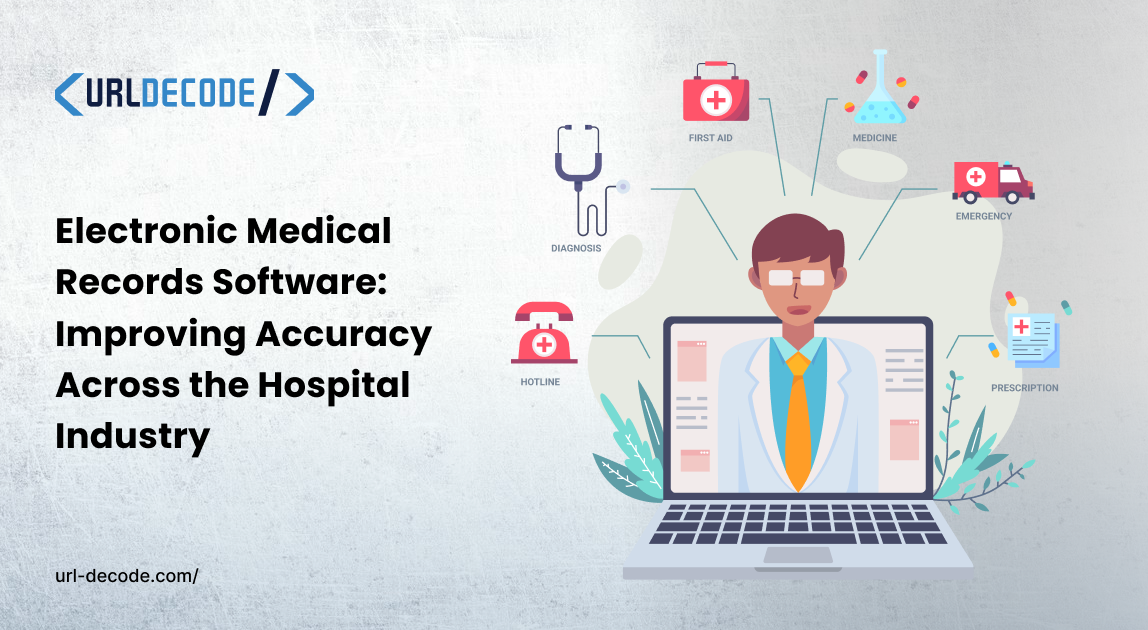
EMR Software is revolutionizing how healthcare staff capture, store, and use patient data in the entire hospital sector. As demand moves towards the need to be more digital and deliver care faster, EMR Software in India has taken the form of a fundamental backbone of hospitals that wish to minimize the number of errors in their hands and increase clinical confidence.
The transition from paper-based operations to smart digital workflows is helping medical personnel operate more accurately and confidently.
Real-time access to current records of patient history, lab results, medication information, and treatment notes is guaranteed by a modern EMR Software Solution. This not only enhances the accuracy of diagnosis but also enhances inter-departmental cooperation. Healthcare institutions are willing to use the most suitable EMR software that is easily integrated, features an intuitive healthcare UI/UX design to ensure it remains easy to operate for medical staff, and provides strict data security.
With the current advancement of the EMR/EHR software, hospitals begin to enjoy increased efficiency, enhanced compliance, and safer patient outcomes. The fact that Electronic Medical Records Software is increasingly being used underscores its importance in terms of developing a more precise and future-savvy healthcare ecosystem.
Evolution of EMR Software
The development of Electronic Medical Records Software has changed the way healthcare organizations handle patient information, workflow, and decision-making. Early EMR systems could only achieve basic data entry and storage of digital files, but nowadays, EMR systems have evolved to be smart and can assist entire clinical processes.
The trend of cloud architecture, automation, and real-time access has enabled the leading EMR software to improve accuracy, decrease paperwork, and automate hospital processes.
As the digitalization process gains strength, the EMR Software in the India market has been growing at an exceptional pace due to the demand for secure, interoperable solutions. Contemporary EMR system platforms are now combined with billing, pharmacy, diagnostics, and other fundamental modules within a hospital management system, which guarantees the uninterrupted flow of data throughout the departments.
This development has eradicated redundancy, reduced errors, and improved overall care coordination. The modern EMR Software Solution provides superior charting, electronic prescriptions, decision support, and comprehensive analytics to enable healthcare professionals to provide more timely and accurate care.
With the trend in automation and AI-related insights within the hospital environment, EMR technology keeps developing with more intelligent and user-friendly features that transform the process of patient care provision. The path from paper charts to linked digital systems demonstrates the importance of EMR innovation in healthcare.
Importance of EMR Software Solution in Modern Healthcare
The healthcare sector is quickly moving towards digital transformation, and the EMR Software Solution is a key building block to a smarter, safer, and more efficient healthcare delivery. Contemporary EMR systems are not limited to keeping digital records but are a means of establishing a network of interconnected components that allow patient information to travel throughout the departments easily, thus facilitating decision-making in a timely and accurate manner.
EHR Software in Healthcare can help decrease the number of mistakes, provide evidence-based care, and improve the overall clinical results due to the provision of structured documentation, real-time access, and better coordination.
With the gain in digital adoption, major EMR/EHR Software development companies are aiming to come up with smart, user-friendly, and interoperable systems that will meet the demands of hospitals, clinics, and specialty practices. These solutions are also compatible with other Healthcare Systems, such as lab systems, pharmacy, radiology, and billing; all the functions of the system run efficiently.
Among the most influential advantages is the way Doctors simplify patient care with unified patient histories, automated reminders, treatment insights, as well as secure communication tools. Clinicians are able to make faster decisions and provide personalized care with instant access to accurate records without any delays in the administrative process.
The relevance of EMR software in the present-day digitalized world is based on the fact that it will enhance productivity, increase accuracy, and contribute to the healthcare infrastructure of the future.
Core EMR/EHR Software Functionalities
The current EMR/EHR software capabilities are aimed at simplifying, streamlining, and enhancing the entire clinical process of hospitals and clinics. The properly designed EMR dashboard provides a single-source perspective on patient information, booking, clinical notes, and work, allowing healthcare professionals to obtain access to essential data in real-time. Individualized template options offer physicians more convenient and quicker documentation of each case, as they are able to use specialty-specific forms that reduce repetitive work and increase the accuracy of documentation.
Patient engagement is enhanced because of a secure Patient health portal, whereby people can access prescriptions, appointments, and Digital medical access at any time. Advanced apps, Appointment management, and OPD Management modules assist the hospital in managing the flow of patients effectively. The Real-time medical reports, E-test reports, and Radiology picture acquisition help to provide real-time clinical insight, facilitating faster diagnosis and treatment planning.
An effective EMR also guarantees Cross-system interoperability, which allows the exchange of data between departments without any difficulties. This involves Pharmacy integration for seamless medication integration, Laboratory integration for automated updates of tests, and billing modules for proper Billing and Invoicing. Smart Finance management tools such as Rillion's AP automation software enhance financial transparency by tracking the cost, revenue, and claims, and could result in massive cost savings across departments and net you various benefits from pharmaceutical rebates to improved cash flow predictability.
Healthcare providers are able to have mobility, scalability, and secure remote access with a Cloud-based EMR. Online consultation allows the use of integrated communication features, and timely follow-ups, reminders, and clinical actions can be performed with the help of Alerts and notifications.
The large volume of documents is served by efficient Document management, which guarantees the rapid storage and retrieval of patient files. Modern EMR/EHR systems have the ability to provide better, faster, and more coordinated care by allowing an Automated operational process in hospitals.
Data Security & Compliance in Electronic Medical Records Software
Data security and compliance are also very important factors in the functionality and dependability of Electronic Medical Records Software, and this has been more evident as more healthcare organizations turn towards online platforms in making clinical decisions. Up-to-date EMR Software available to doctors is constructed to have multilayer encryption, a secure login procedure, and strict controls on access to ensure that sensitive patient data is protected at all levels.
These systems allow role-based permissions, audit trails, and on-the-fly monitoring to forestall unauthorized access as well as identify suspicious activity in real time. EMR security structures in a hospital management system guarantee that patient data, prescriptions, diagnostic data, and treatment plans are both stored and exchanged as per the national and international healthcare data protection requirements.
Data backup, disaster recovery, and safe cloud storage are compliance features that protect medical records against cyber-attacks, technical outages, and unintentional loss.
Digital trust is also enhanced by regulatory compliance. Adherence to healthcare standards guarantees transparency, precision, and accountability when managing patient data. Through a high degree of integrity and confidentiality, Electronic Medical Records Software enables hospitals to provide safe and reliable care.
When we live in times when data breaches are on the increase, secure EMR platforms can not only ensure patient privacy but also improve operational efficiency, giving healthcare providers the opportunity to commit to providing quality treatment with a sense of security.
Conclusion
Electronic Medical Records Software has become an integral part of the contemporary healthcare system, with a significant contribution to the accuracy, efficiency, and coordination within the hospital industry. EMR platforms provide quicker documentation, fewer mistakes, and better patient outcomes due to the substitution of manual workflow with clever digital systems.
They do not have to worry about the future of healthcare settings, as they are able to integrate departments, make real-time decisions, and enhance data security. With the further implementation of sophisticated digital technology in hospitals, the role of EMR technology in the provision of quality patient care will become even more important.