Custom Drupal Development vs Templates: What's Better for Your Business
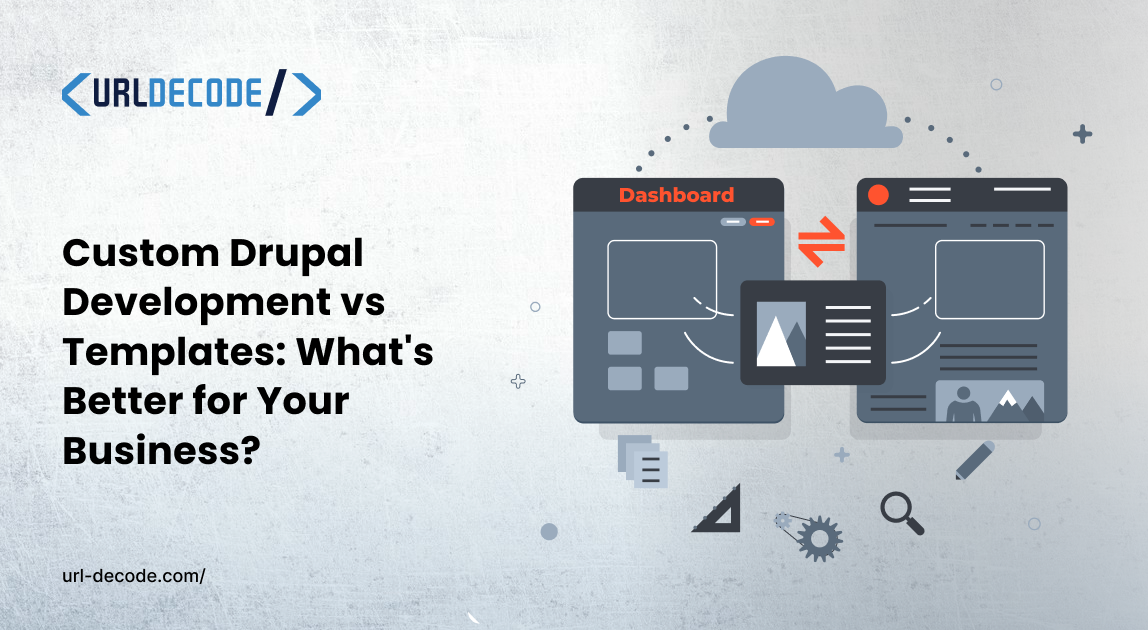
When companies choose to build or update a site on Drupal, they often ask: Should we use a custom design or a template?
It is a mere decision to make. Templates are faster and cheaper at first. They also look professionally made. Custom development is more time and investment-intensive. Why then should anyone take the more difficult way?
The answer depends on your business needs. Think about what you need now, in six months, and in three years. I’ve worked with various organisations that help nonprofits and businesses. I’ve seen what works well and what doesn’t in both fields. The difference can hardly ever be whether one of them is objectively better. It refers to which one suits you.
What Drupal Templates Actually Give You
Drupal boasts a robust contributed themes ecosystem. Most of them are attractive, mobile-friendly, and have been tried on thousands of websites. If you run a small organisation and have a tight budget, a good theme can help you a lot. If you're not ready to invest in full-scale Drupal Development Services, this is a great option.
The templates are bright when the purpose of your site is quite clear. A premium theme can build a great brochure site, a simple blog, or an easy info portal. You can use different content types, too. You pay less at first. You can go live faster. Your staff can start creating material in weeks, not months.
The community knowledge that can be had around popular themes is something to be said as well. You can easily access tutorials, documentation, and forums. So, troubleshooting is simple even when specific developers aren’t available.
But this is what templates provide you as well, that one may not mention much, limitations.
The Hidden Cost of Templates
Drupal themes are built on assumptions. The designer made choices about layout, content areas, navigation systems, and design language. These decisions might not match how your business runs. That’s where professional Drupal Development Services can help.
Once you attempt to push a template past those limits, you begin patching. To change the appearance, you make overrides to the custom CSS. You modify the module settings to suit your content model. Instead of addressing problems directly, you work around them. Over time, these workarounds add up. What starts as a simple site can become a patchwork. This makes it hard to maintain and even tougher to hand off to another developer.
There is also the issue of branding. The same theme can be purchased by your competitors. In today's world, brand identity matters a lot. Your site looks like many other Drupal sites, so it's not helping you stand out.
And then there's performance. Most off-the-shelf themes are made for a general audience. This often means they load assets you may never use. Large stylesheets, unused JavaScript libraries, and basic image processing slow down page load times. This affects both your search rankings and user experience.
What Custom Drupal Development Actually Means
It is not all about creating something new since it is a custom development. It's about building a site that meets your needs, not changing your needs to fit a template.
A custom Drupal development gives you a tailored content structure. This structure helps your team create and manage content more effectively. Your content types, what you see, and how you work depend on your actual processes, not on a generic template. What it produces is a CMS that will be intuitive to your editors since they were designed to be used by them.
Custom development means your site will look and work the way your brand needs. You won't find any workarounds or leftover CSS from other designers. Also, there won't be any generic items you'll never use.
Another major strength is performance. A dedicated Drupal application can be optimised down to its core. You can customize caching, picture pipelines, database lookups, and asset loading. Do this based on your usage and traffic patterns. This is critical when you have thousands of users on your site, complex content structures, or when you're using modern frontend frameworks like astro CMS to deliver faster user experiences.
A tailored strategy is also good for security. Templates often have more modules activated than needed, which raises the attack surface. A custom build includes what you need. It can be tailored to fit your industry’s security needs or compliance requirements.
The Real Question: What Stage Is Your Business At?
In the case of a startup or a small organisation that has just started building its online presence, a properly selected Drupal theme with a well-built configuration could be fully suitable. The aim is to go online and understand what your audience actually requires and to test. Custom development can be costly, especially if you’re unsure of what your users want.
After you complete the exploratory phase and understand your product, audience, and growth path, a template might slow you down. Custom links for your CRM, unique workflows for your editorial team, or special user experiences can be hard to achieve with templates. This can hold back your platform's growth.
Custom Drupal development is helpful for many. It benefits enterprise organizations, media companies, government agencies, and colleges or universities. Their content models are complex. Their compliance standards are precise. They have high traffic, and their brand equity is real. A template is not able to bear that weight.
Integration Complexity Changes the Equation
Third-party integration is one aspect that is usually ignored in the templates versus the custom argument.
The current business world does not operate an isolated website. They connect it with CRM systems like Salesforce or HubSpot. It links to marketing automation tools, e-commerce platforms, payment gateways, analytics systems, and internal databases. All these integrations are accompanied by their complexity.
Templates are not created using your integration stack. Connecting them to your current systems may require a lot of custom development. This can erase the cost savings you were expecting. Starting custom Drupal development begins with your integration needs. We then build the architecture to fit those needs from day one.
Maintenance and Long-Term Ownership
The templates rely on the original authors. You must have your theme compatible when Drupal core issues a security update. Once the theme has been updated, you must test that it does not violate your customizations. This dependency of maintenance is present and continuous.
Bespoke websites put your group or your development partner in a position of having clear ownership of the codebase. No third-party theme to wait on. The updates appear on your feed, and the creator has the whole picture of what they developed.
Making the Right Call
Both templates and custom development have their place. There’s no single right answer.
Choose a template for a quick fix if you have basic needs, are on a budget, and aren't sure how your online presence should look.
Choose custom Drupal development if your business has unique content, workflows, or integration needs. Choose it when you want to stand out, grow fast, or need top performance, easy access, or strong security.
Most organizations choose a gradual approach. First, they start with a basic setup to get online. They invest in custom development when their needs are clearer and their business can support it. Drupal's architecture supports this type of evolution. That’s why many organizations choose it. They understand the importance of a strong digital presence.
Regardless of the path you choose, engage in thoughtful consideration. Don’t just pick the first option that seems easy. Your website is likely to be your first impression and the last thing between you and a lost opportunity. It should be a considerate decision.