Challenges of Sanctions Screening for International Businesses
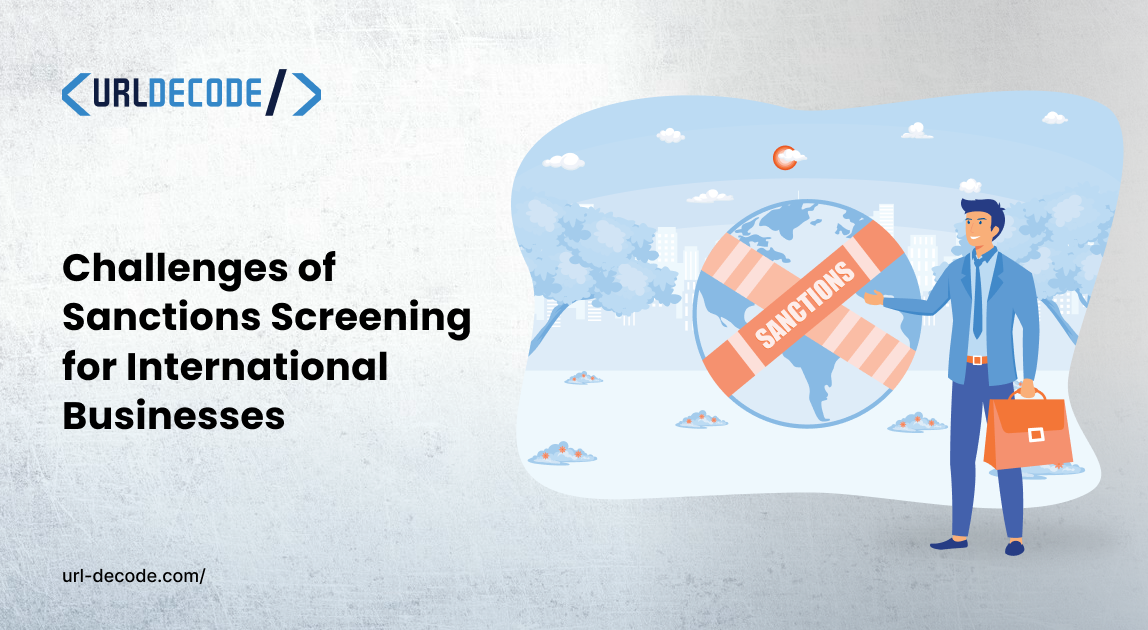
Sanctions Screening is an area where international businesses are increasingly pressured by the regulatory demands of international authorities. When engaging in cross-border business, having a varied customer base and complicated supply chains, businesses are faced with managing risks associated with approved persons, organizations, and jurisdictions.
To manage these tasks, it is necessary to have effective oversight by relying on sound procedures that will assist in avoiding violations, safeguarding financial integrity, and enhancing the overall AML compliance initiatives within international settings.
Seven Continents of Global Regulatory Complexity
Companies conducting their activities in different locations face diverse regulations that are associated with international sanction systems. The countries keep their own lists, such as the OFAC Sanctions List and regional restrictions, which are often changed. Such variations result in difficulties in coming up with standard procedures.
Global firms should be careful and make it a part of their daily operations to update their regulatory policies to avoid being exposed to violations or facing sanctions against regulatory misalignment.
Secondary Sanctions Risks
Secondary Sanctions cause further complexities for firms operating in interdependent markets. Such measures may be implemented even in cases where an organization does not directly work in a limited area. The higher the indirect exposure, the stricter compliance teams need to be, by having a detailed oversight of the counterparties.
Monitoring should be organised very effectively to prevent unintended engagement with people or organisations that are listed in global watchlists or similar implementation measures.
Operational Barriers and Data Quality
High-quality data is at the core of Sanctions Screening. Inconsistent or incomplete customer information may impact the accuracy of matching processes and raise false positives. This is reputed to be a challenge to multinational companies that need to have clean data across various systems or regional offices.
The solution to these gaps involves continuous governance, streamlined workflow, and consistent internal communication that will enable teams to identify risk by being more certain.
Technology Limitations
There are numerous international businesses that are based on legacy technology and are unable to sustain contemporary Sanctions Screening procedures. Aging systems might not have good matching logic, real-time updates, and multilingual facilities. These restrictions have the ability to cause delays in determining restricted parties in various jurisdictions.
The investment in better workflows and robust data structures will assist organizations to be in tandem with the changing AML expectations and have more agile risk management processes.
Complexities of the Cross-Border Transactions
Cross-border transactions are transacted through several financial institutions, thus making it hard to detect the limited parties. Differences in language, names, and local record-keeping may lead to differences in the screening practices. In case of inconsistencies in customer information, the teams might fail to find the links to sanctioned persons.
This puts a strain on operations and necessitates lean processes and properly laid out management to handle it.
The cross-border transactions are transacted through several financial institutions, thus making it hard to detect the limited parties. This is one reason businesses are shifting to modern cross-border payment infrastructure that reduces the number of intermediaries involved in each transaction, simplifying compliance oversight.
The Major International Business Screening Problems
The challenge for international companies regarding effective Sanctions Screening programs is that it involves complex issues of operations. Such challenges tend to rise with the growth and expansion of organizations into new markets or when dealing with suppliers in locations with high risks. It is necessary to maintain consistent processes that will eliminate vulnerabilities and provide reliable AML controls.
Common challenges include
- Differences in international regulations in different jurisdictions.
- Challenges in handling big data of varied customer information.
- False positives are increased by inconsistent information.
- The barriers to technology that ensure multilingual screening or real-time screening are hampered.
These difficulties indicate the significance of making investments in systematic procedures and effective internal regulations. By filling these gaps, companies can improve their decision-making skills, minimize delays in operations, and improve the effectiveness of their global compliance system.
Linguistic and Cultural Differentiation
International operations introduce varying naming and spelling procedures, and cultural distinctions affecting the quality of screening. These are factors that may complicate association with restricted persons or organizations. The compliance teams need to be aware of the effects of regional naming structures on matching quality.
This assists in minimizing mistakes and reinforcing identification practices that will aid in larger AML goals in various areas.
Supplier and Third Party Risks
The inclusion of international suppliers exposes the company to other companies in risky jurisdictions. The companies should make sure that third parties are vetted on a regular basis to prevent the violation of international restrictions. In the absence of trustworthy processes, firms will end up in transactions with organizations that are associated with enforcement measures.
Enhancing the monitoring of the suppliers and partners becomes a necessary part of a stable AML environment.
Staying on Track with Regulatory Changes
Sanctions programs evolve quickly, which makes it necessary to constantly follow them and make internal changes in time. Failing to keep up with them may lead to exposure to world regulatory measures. The international bodies have to make sure that the new restrictions, upgraded lists, and developing trends of implementation are incorporated into their screening processes.
Keeping up to date is a useful method of maintaining compliance within the firm and reduces the chances of missing out on important regulatory changes in international markets.
Final Words
Sanctions Screening offers great challenges to international business because of the complexity of the regulations, variety of data formats, and swiftly evolving global restrictions. Companies can enhance cross-border oversight by emphasizing better data quality, modern technology, and excellent governance.
These initiatives go toward mitigating the risks associated with Secondary Sanctions and facilitate a more robust AML compliance system that safeguards organizations in the increasingly regulated environment of the world.