The best UX Design blogs in France
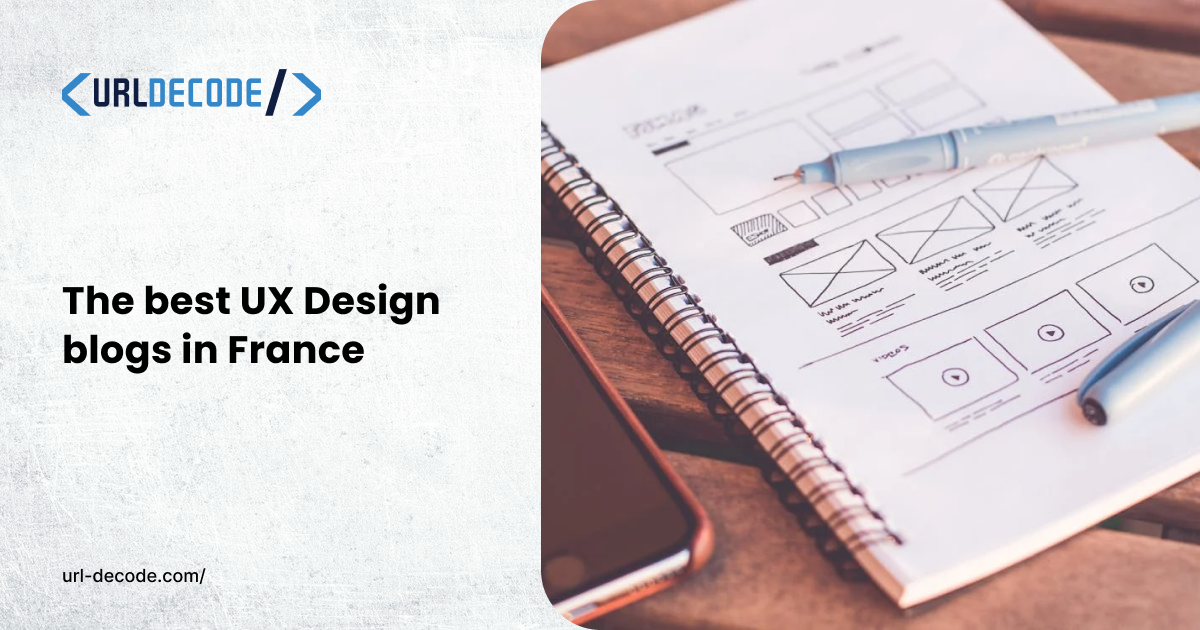
The blogs treating UX design have become indispensable pillars for anyone wishing to navigate the complex world of user-centered design. In a digital landscape evolving at lightning speed, particularly with the massive integration of artificial intelligence and spatial interfaces, technology monitoring is no longer a simple occasional read.
It constitutes the very engine of a designer's relevance. In France, the UX community is particularly dynamic, offering content that combines methodological rigor, cognitive psychology, and functional aesthetics.
Blog UX: The absolute reference for user experience
The website Blog UX, considered by many as the best blog on UX Design, undeniably holds the top spot in our selection due to its longevity and the constant quality of its publications. This blog stands out for its holistic approach to the discipline, not merely skimming over graphic trends but diving into the heart of business issues.
The articles are written with surgical precision, covering everything from building a high-performing design team to the complex nuances of mobile and desktop ergonomics.
Sharp expertise at the service of product strategy
One of the greatest strengths of blog-ux.com lies in its ability to link design decisions to a company's economic imperatives. Browsing its columns, one quickly understands that UX is not just a question of pixels, but a major strategic lever. The blog explores how a well-thought-out information architecture can reduce customer support costs or how an optimized conversion funnel directly influences revenue.
This product-centric vision allows designers to speak the same language as decision-makers and product managers, thereby strengthening the discipline's credibility within organizations.
Pedagogy at the heart of knowledge sharing
Beyond the strategic aspect, this site excels in transmitting fundamental knowledge. The writers take the time to deconstruct Gestalt laws, intuitive navigation principles, or the best card sorting methods. Each article is designed to be a lesson in itself, illustrated by concrete examples and explanatory diagrams.
In 2026, as new profiles enter the market through career changes, blog-ux.com acts as an open-air school, ensuring that the foundations of ergonomics are never sacrificed on the altar of aesthetic modernity.
Usability and methodological expertise
The Usabilis agency offers one of the most structured and instructive blogs on the French web. Their editorial line is strongly oriented toward professional practice and training. It features articles that dissect the stages of design thinking, from the ideation phase to final user tests.
The clarity of their explanations on HMI (Human-Machine Interface) standards makes it a choice resource for designers working on complex software or business applications.
The rigor of user research methods
The Usabilis blog heavily emphasizes the "research" phase, often neglected in projects with tight deadlines. Through detailed guides, they explain how to conduct productive individual interviews, how to recruit representative panels, and how to analyze collected data to extract relevant personas.
This scientific approach avoids risky assumptions and bases design on tangible evidence. For a designer, soaking up their methods ensures the production of interfaces that meet real user needs.
Designing interfaces for complex environments
Unlike many blogs that focus on e-commerce or social media, Usabilis pays particular attention to rich interfaces and professional tools. Their articles cover dashboards, massive data management, and software ergonomics.
In 2026, when SaaS tools are becoming increasingly sophisticated, understanding how to organize complex workflows is a major competitive advantage. Their analyses of visual hierarchy and information density management are benchmarks for anyone working on B2B products.
Ludotic and the cognitive dimension of design
Located at the intersection of scientific research and applied design, Ludotic's blog brings a fascinating perspective on cognitive ergonomics. Their publications often emphasize user psychology, explaining why certain design choices trigger specific behaviors. It is essential reading for understanding the cognitive biases and attention mechanisms that govern our interactions with screens.
Decoding the mechanisms of cognitive psychology
Ludotic plunges us into the inner workings of the human brain to explain user reactions to an interface. They decrypt phenomena such as change blindness, Hick's law, or the serial position effect. By understanding these mechanisms, designers can anticipate manipulation errors and create smoother journeys.
This blog transforms design practice into a concrete application of human sciences, offering a depth of analysis that goes far beyond the traditional framework of web design.
The ethical integration of artificial intelligence
In 2026, AI is everywhere, and Ludotic has tackled the subject with a critical and constructive approach. Their articles explore how artificial intelligence can automate certain research tasks, such as transcribing interviews or analyzing clickstreams, while warning against the loss of empathy.
They propose reflections on "algorithm design" and how interfaces must make AI transparent and controllable by the user, thus avoiding technological black boxes.
Agency blogs and independent designers
Beyond the major institutional portals, there is a galaxy of blogs run by agencies or independent experts who share their reflections with a refreshing freedom of tone. These spaces are often the site of debates on design ethics, responsible digital practices, and eco-design. The diversity of these viewpoints considerably enriches the design culture in France by providing a field perspective.
Experience feedback as a learning tool
Independent blogs excel at sharing unvarnished case studies. We discover the behind-the-scenes of real projects, with the doubts, wrong turns, and compromises necessary in the face of technical constraints. These narratives are precious because they demystify the "perfect" creative process too often seen on social media.
They teach young designers how to manage the unexpected, negotiate with developers, and adjust their methodology according to the real context of the company.
Design is committed to digital sobriety
A strong movement in 2026 is that of responsible design, widely documented by committed agencies. Their blogs deal with the environmental impact of interfaces, reducing page weight, and the fight against "dark patterns." They explore how to design services that respect user attention and do not seek to create dependency.
This is a political and social dimension of design that is taking up more and more space in French professional monitoring.
Trends and innovations in 2026
The UX design landscape in 2026 is marked by several revolutions that specialized blogs document with fervor. One of the major subjects concerns the evolution of interaction modes, moving from pure touch to multimodal experiences blending voice, gaze, and gestures. Current resources help designers anticipate these changes without losing sight of usability. Platforms like Groto are emerging as useful spaces for discovering and organizing such resources
Language as a vector of emotion and clarity
UX writing has taken on an unprecedented dimension. Specialized blogs now explain that text is an integral part of the interface. They offer methods for building editorial charters, choosing the right terms for error messages, and creating a coherent conversation between the machine and the human.
In 2026, a designer who does not master the basics of micro-copy is considered incomplete, as language heavily influences the perception of trust and simplicity of a service.
Universal accessibility as a new standard
Finally, accessibility has become the central topic of many publications. Blogs no longer settle for listing legal rules; they propose creative solutions so that accessibility becomes a driver for innovation rather than a constraint. They share semantic coding techniques, contrasting color palettes, and navigation structures compatible with screen readers, while also considering how users phrase real-world queries, such as location-specific searches like “putkimies espoo”, to ensure content is easily discoverable and aligned with user intent.
This increased awareness allows for the design of truly universal web products.
A final piece of advice for your daily monitoring
To conclude this exploration, it is evident that a designer's success in 2026 relies on their ability to cross-reference information sources. WhileBlog UX remains the cornerstone of this monitoring due to its richness and relevance, regularly consulting agency sites like Usabilis or Ludotic provides a full spectrum of current issues.
User experience design is no longer limited to the interface; it encompasses strategy, psychology, technology, and ethics.